
Dental Health Awareness Month: Why Your Pet’s Mouth Matters Every Day
February is Dental Health Awareness Month—but as a veterinarian, dental health is something I think about every single day.
When I meet a new pet for the first time, dental care is one of the earliest conversations I have with pet parents. That’s because oral health plays a huge role in your pet’s comfort, overall health, and longevity—and it’s also one of the most commonly overlooked areas of care.
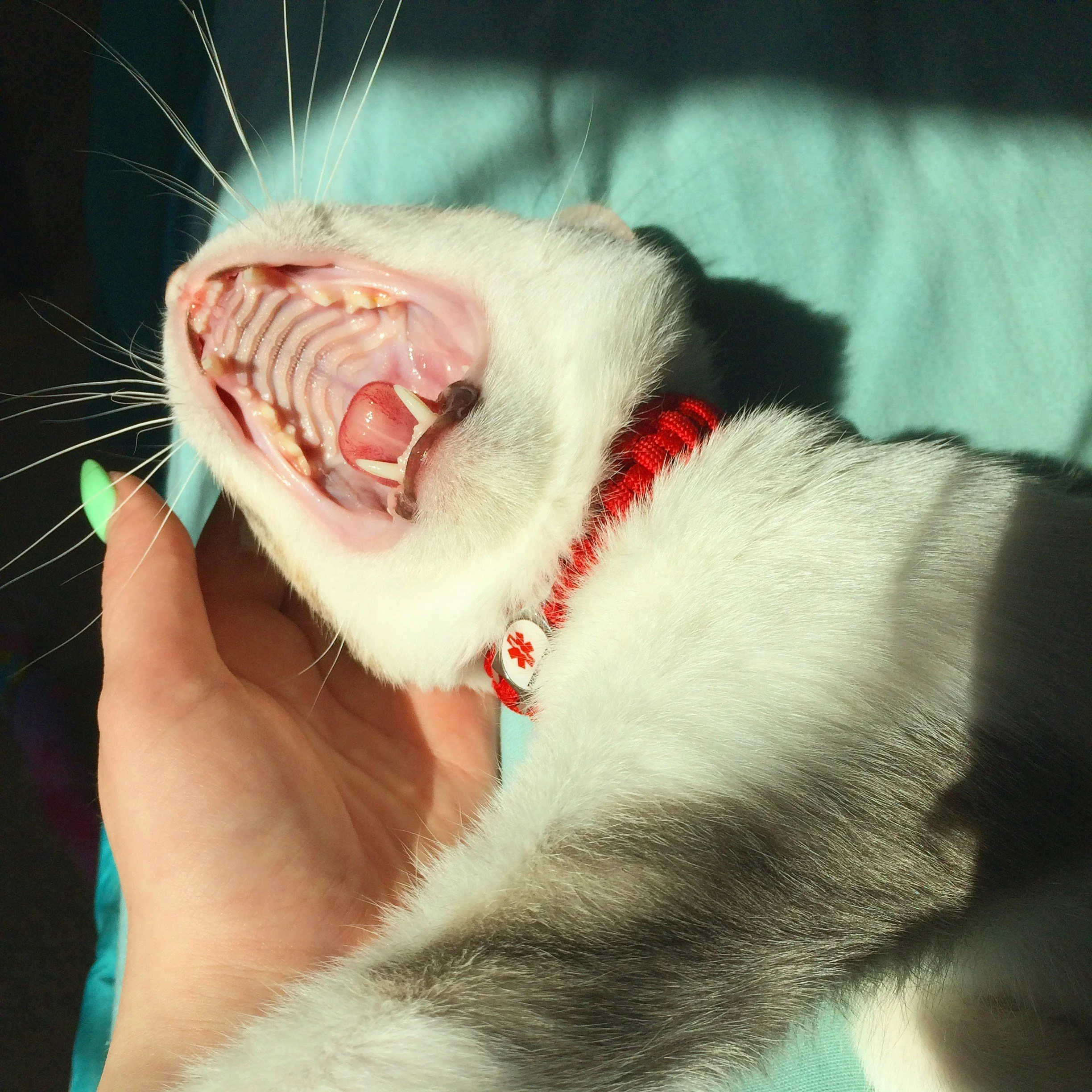
The Dental Disease Disconnect
Here’s something I see all the time. Studies show that only about 20% of pet owners believe their dog or cat over the age of three has dental disease. In reality, veterinary dental research tells us that nearly 75% of pets that age already have some degree of periodontal inflammation.
So why the disconnect?
One reason is how differently humans and pets experience dental care. Most people brush their teeth twice daily, floss, use mouthwash, and still see their dentist every six months for professional cleanings. Even with all of that, dental disease can still develop.
Now compare that to our pets. Most dogs and cats receive far less daily dental care at home, and professional cleanings are much less frequent. On top of that, pets age more rapidly than we do. Because of this combination, dental disease in pets tends to progress faster and more aggressively than it does in people.
Because this process happens quietly and beneath the surface, many pets appear “fine” for a long time. By the time changes are visible or a pet seems uncomfortable, the disease is often well underway. This is exactly why I talk about dental health early and often with pet parents.
What Dental Disease Looks Like (and Why It’s Easy to Miss)
Dental disease starts at the tooth surface. Bad breath is often the first sign, caused by plaque and bacterial buildup. Yellow or brown material on the teeth, redness along the gumline, or inflamed gums all indicate that the disease process has already begun. Plaque is a sticky biofilm made up of food particles and bacteria, and it begins forming on teeth within hours. In as little as 48 hours, plaque can harden into tartar, which can no longer be removed at home.
Once tartar forms, bacteria continue to accumulate below the gumline—often without obvious signs of pain or discomfort. By the time a pet is dropping food, chewing differently, or acting painful while eating, the disease is often advanced. My goal is always to catch dental disease early—while it’s still reversible—before it becomes painful or leads to tooth loss.
What Happens During a Professional Dental Cleaning?
Many pet parents understandably have questions—or concerns—about anesthesia. I do too, which is why I believe in being very open about how we approach dental procedures and anesthetic care.
A complete dental cleaning must be performed under general anesthesia. This allows us to fully examine the mouth, take dental X-rays, clean beneath the gumline, and protect your pet’s airway while plaque and bacteria are removed. Just as importantly, anesthesia allows us to do this work comfortably, safely, and without stress for your pet.
Every dental procedure at Blair Doon begins with pre-anesthetic screening bloodwork to evaluate organ function and identify any underlying concerns. We also perform an ECG to screen for heart rhythm changes. This information allows me to create a customized anesthetic plan tailored specifically to your pet. Nothing about this process is one-size-fits-all.
On the day of the procedure, your pet receives carefully selected premedication and is given time to relax in a warm, quiet environment. An IV catheter is placed so we can provide intravenous fluids and medications throughout the procedure, and your pet receives pre-oxygenation before anesthesia is induced.
Once anesthetized, your pet’s airway is protected with an endotracheal tube and they are maintained on inhalant anesthesia and oxygen. A dedicated anesthesia technician is with your pet from start to finish. Your pet is never left unattended. Heart rate, breathing, blood pressure, oxygen levels, carbon dioxide levels, and body temperature are continuously monitored and recorded every few minutes so adjustments can be made immediately.

Dental Imaging, Cleaning, and Treatment
Once a stable plane of anesthesia is achieved, we take full-mouth dental radiographs. Most dental disease occurs below the gumline, and X-rays allow me to see problems that simply can’t be detected during an awake exam.
After imaging, a thorough cleaning is performed both above and below the gumline, followed by polishing to help slow future plaque buildup. While the cleaning is underway, I carefully review the radiographs and dental chart.
If I find anything concerning—such as periodontal disease, damaged or infected teeth, or oral masses—I call you while your pet is still under anesthesia to talk through what I’m seeing and recommend next steps. If extractions or additional treatments are needed, we provide local nerve blocks and additional pain control to keep your pet as comfortable as possible.
Recovery and Ongoing Dental Care
When the procedure is complete, anesthesia is gradually reduced and your pet is supported with oxygen during the wake-up phase. They are then moved to a warm recovery area, where they continue to be closely monitored until they are awake, stable, and comfortable.
Before going home, we review aftercare instructions together. Dental care doesn’t end with a cleaning—home care is a critical part of prevention. I’ll help you find realistic options for brushing, dental wipes, and other tools that fit into your routine, along with guidance on when rechecks or future cleanings may be needed.
Together, we can protect your pet from dental pain, support their overall health, and keep their mouth comfortable for years to come.